As they do every spring, Greensboro Montessori School's Junior High students recently engaged in their final Great Debate of the year in history. Students addressed and argued both sides of two debates. The first questioned whether the purposes of government are best served by an authoritarian approach. The second questioned whether the primary role of a government should be to meet the needs of its people. The debates provide Junior High students the opportunity to argue in a logical and clearly defined manner.
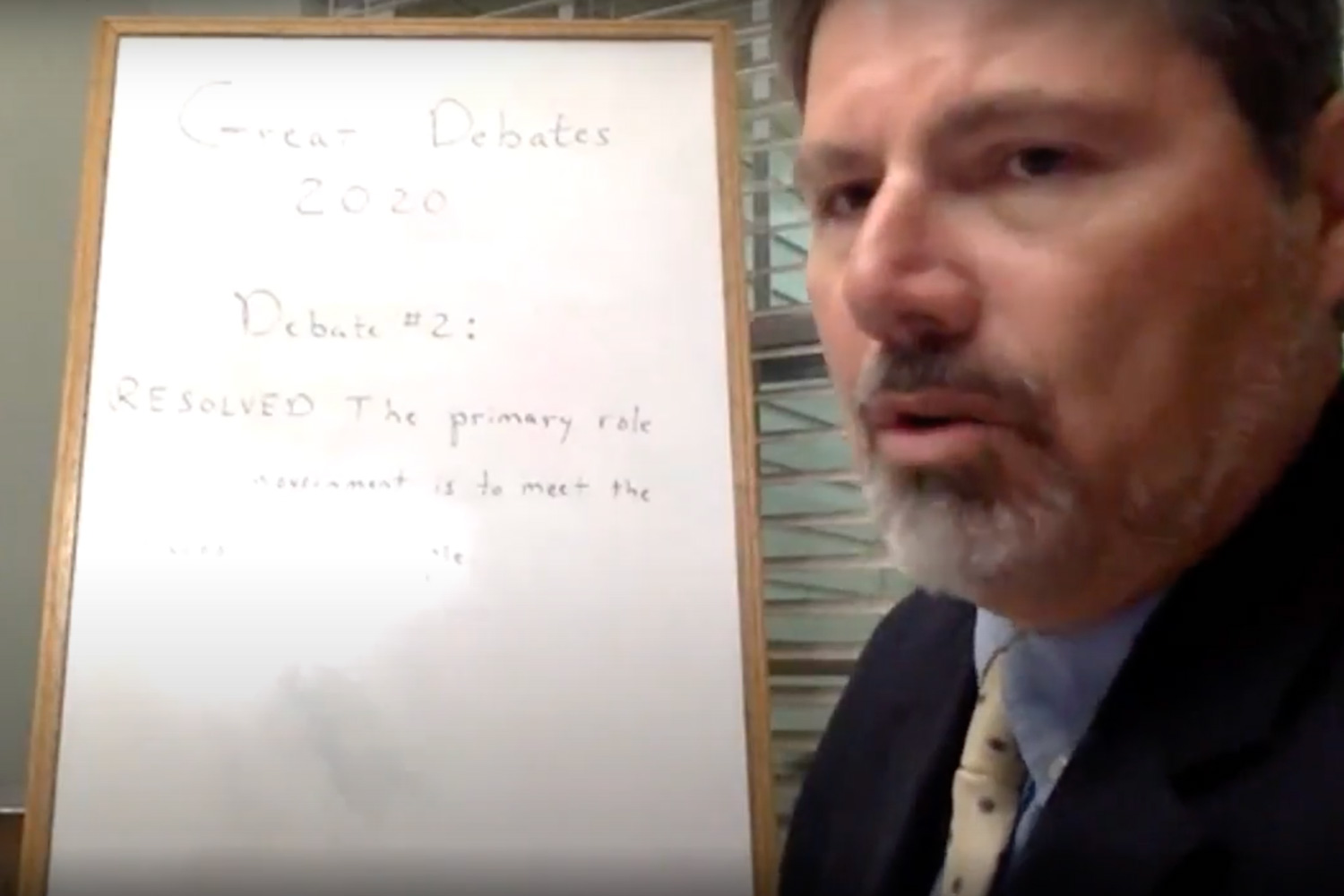 While The Great Debates are usually hosted in the classroom, this year's final debates were argued virtually through Google Hangouts. 57 participants, including students from both Junior High and Upper Elementary, attended the event, deepening their understanding of many forms of government and economic systems, including authoritarian, capitalist, communist, and socialist.
How the Debates Work
Teams of two or three students are given their topic in advance, but they do not learn which side they are on, for or against, until the morning of the debate. As a result, they must analyze and evaluate both sides and research and compile points and examples supporting both arguments. Each student writes two formal position papers, one for each side of the argument. This helps them broaden their thinking and mental flexibility.
 The debates follow a modified version of standard debate procedure, with an opening argument, sometimes shared by two teammates; time for preparation of rebuttal; and then closing arguments and rebuttal, by the remaining member of the team. Faculty members observe, discuss and provide extensive oral feedback to the teams about the debate.
How Topics are Selected
The topics of the debates are drawn from subject matter the students have discussed in history classes during the preceding several weeks. Students are encouraged to go beyond the class discussions in gathering information and building their arguments.
The process allows students to go beyond what they have learned and apply it to larger questions, to develop their reasoning and ability to build and support logical arguments, and to gain confidence and develop greater precision in presenting their thoughts persuasively.
How We Learn
As Junior High students move into and through adolescence, it’s imperative they receive authentic support for their burgeoning philosophical questioning, curiosity in the world around them, and deep desire for belonging within their peer group. Greensboro Montessori School honors these needs through the concept of valorization, which is a pillar of our Junior High curriculum.
Valorization is the process of understanding you are a strong and worthy person. It is the process of self-actualization and fulfillment. It is not about surviving hours of arbitrary homework or memorizing facts for the next test. It’s about completing meaningful work, unleashing academic excellence, and solving real-world problems.
The Great Debates are just one example of how Greensboro Montessori School students experience valorization by developing self-worth, skills, and courage through purpose-filled work. Learn more about how we build valorization through our science curriculum in our recent blog about Trout in the (Indoor, Outdoor, and Virtual) Classroom.
If you are interested in learning more about Greensboro Montessori School's student-centered Upper School serving motivated learners in fourth to ninth grades, we encourage you to schedule a virtual information session. We welcome an opportunity to meet you, learn more about your family, and explore Greensboro Montessori School could partner with your family.
Greensboro Montessori School's Junior High students just culminated one of their project based learning assignments – hatching, growing, and releasing brown trout.
Junior High science teacher, Tim Goetz, released the trout in a cold water tributary of the Smith River near Bassett, Virginia. It was a Friday morning in the middle of the COVID-19 pandemic. Normally, our Junior High students would have been stream-side with Tim, and it would have been their job — not their teacher's — to complete the final step of their semester-long project. Instead, students joined Tim virtually to watch the trout meet their natural habitat.
As the trout grow, they will make their way up river into the Smith River. Along the way, they will eat land and water insects, zooplankton, worms and other aquatic creatures. They will also search for hiding places from predators, including birds and other fish. Tim Key, a member of the Nat Green Fly Fishers Club, who was present at the release said "these are some of the best fish I have every seen."
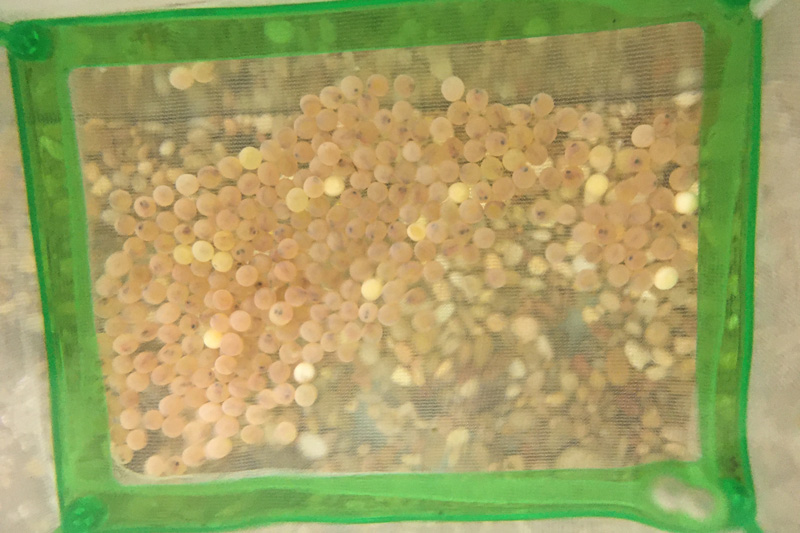 The fish were hatched at Greensboro Montessori School as a part of the nationwide Trout in the Classroom program, with support from the Dan River Basin Association, and Tim Key of the Nat Greene Fly Fishers Club. Over 250 eggs were given to the School on December 5, 2019 and the first hatch was December 10.
The fish were raised in a 45-gallon, cold-water aquarium at 50 degrees Fahrenheit in Greensboro Montessori's Upper School. To quickly prepare the correct growing environment, students mixed five gallons of water from the School's pond with 40 gallons of tap water. Students tended to the fish daily, including feeding, changing water, and water testing. Daily water tests included pH, ammonia, and nitrites with the goal of recreating a natural, cold-water trout habitat. This attention to detail resulted in the science room smelling more like an outdoor classroom next to a river than a traditional classroom.
Eighth grade student, Nina, was the head aquarium tender and her classmate, Ava, provided the backdrop art for the aquarium.
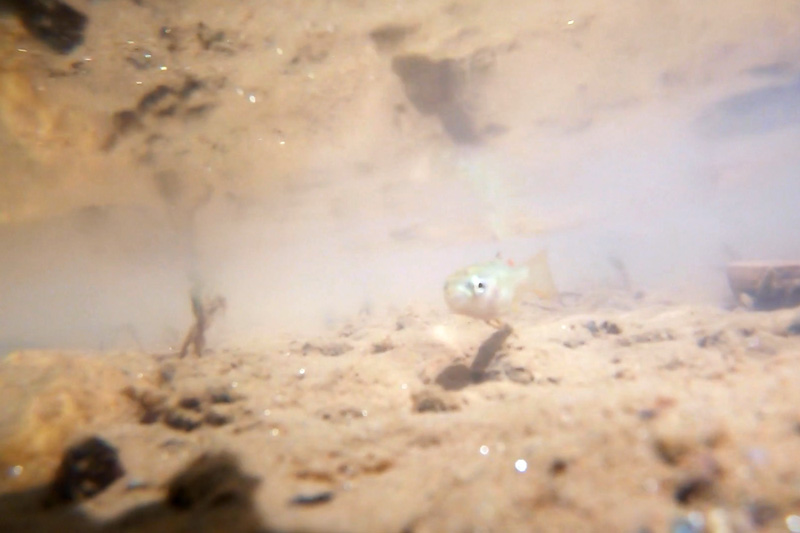 Prior to COVID-19, Junior High students were scheduled to travel to Virginia to release the trout themselves. Their expedition would have been part of their April Land Week, one of several weeks a year when they learn at Greensboro Montessori School's 37-acre satellite campus in Oak Ridge, N.C. With schools throughout the state suspending in-person learning, the students' land week and field trip was cancelled, but not their learning. Students participated in the trout release through a Live Lesson via Google Hangouts. Tim also documented the release on GoPro cameras so he could share the experience with the entire school community, Toddler through Junior High. After all, Greensboro Montessori School students learn everywhere, whether its the indoor, outdoor, or virtual classroom.
Learning through purpose-filled, project-based learning — like hatching, raising, and releasing brown trout into their natural habitat — is not the exception to the rule at Greensboro Montessori School. It is the rule. Our students learn through completing meaningful work, which often results in real-world benefits to the community. Through the multistep process of researching, designing, implementing, refining, analyzing, and presenting their projects, our students gain real-world skills such as resiliency, creativity, curiosity, time management, and public speaking. They also develop a sense of self-worth by understanding the value of their contributions to society and experiencing personal fulfillment.
Click here to read about about another real-world project our Junior High students are leading: inoculating, growing, harvesting, and selling shiitake mushrooms.
In addition to Trout in the Classroom, Dan River Basin Association, and Nat Greene Fly Fishers Club, Greensboro Montessori School would like to thank Oliver Rouch from K2 Productions for lending us GoPro cameras and editing our release footage. We also want to thank Tim Key for his work behind the camera.
Another trip to the restroom. That all-important fourth cup of water. Just one more snack to sustain them until daybreak. Isn’t it amazing how young children become such ardent advocates for self-care as the evening hours roll on? Bedtime struggles are a timeless, and trying, rite of parenthood. Just as we’re ready to wrap up the work of the day and enjoy a fleeting moment of grown-up time, our little ones get a second wind, armed with a million urgent reasons to leave their beds. Are afternoon naps to blame for these late-night revivals?
Toward the end of the first Primary year or middle of the second, some parents begin to wonder if eliminating their child’s naps will ease evening bedtime struggles. In some cases, less sleep during the day can indeed help children nod off earlier at night. However, before dropping naps cold turkey, there are some important factors to consider.
The American Academy of Pediatrics supports the American Academy of Sleep Medicine's recommendation that “children 3 to 5 years of age sleep 10 to 13 hours per 24 hours (including naps) on a regular basis to promote optimal health.” With families’ busy lives, this goal can be difficult to attain without the added rest time an afternoon nap provides. Children who have recurring issues with falling asleep at night may not fill their sleep tanks by the time they need to wake for school the next day, leaving them to navigate their mornings foggy and fatigued. Adjusting this pattern by abruptly eliminating a midday rest may result in emotional and behavioral repercussions later in the day, which can put a real damper on family time.
Napping at Greensboro Montessori School
In the Primary napping room at Greensboro Montessori School, we carefully monitor how long and often children sleep at school. When we notice a child is moving away from napping, we communicate with parents to make a transition plan for gradually eliminating afternoon sleep. Depending on the unique needs of each child, we may begin by abbreviating a child’s nap, waking them after a specified period of time. The duration of sleep is decreased little by little, until the child is ready to forego their snooze altogether. When they wake, we offer quiet, engaging activities until it’s time to transition to the car line or our after-school program. For many children, this opportunity to wake slowly and refresh themselves is much less jarring than an abrupt transition to the active Encore classroom or outdoor play spaces.
In other cases, children may outgrow sleeping on their own, while continuing to benefit from remaining in the nap room for a quiet rest and calming activities such as reading, drawing, or listening to music. When the child shows signs of readiness for more stimulation and movement, we work with the family to plan a transition to our Encore classroom (for first-year Primary students), or for the child to remain in their Primary classroom (second-year year Primary students) through the afternoon.
Is it Time?
If you’re uncertain about whether to begin phasing out your child’s naps, please reach out and let us know. Each child is unique, and requires their own individual approach to this transition. We are happy to keep you posted on your child’s sleeping habits at school, and to partner with you to craft a plan that is responsive to your child’s - and your family’s - needs. We can also provide helpful information on other challenges you may be experiencing while getting your little ones to settle in for the night. Though bedtime battles can seem insurmountable, there are effective strategies for giving and getting the rest we all need. Rest assured that your dreams of bedtime independence will eventually come true, and we are here to help you find your way to a truly good night!
 About the Author
Brooke Juneau is the director of CASA at Greensboro Montessori School. In this role, Brooke oversees the School's before- and after-school programming, along with all summer camps. Brooke first joined Greensboro Montessori School as a Toddler teacher in 2013 and served as an anchor for our Toddler students, families, and faculty for six years. She transitioned into her current role in 2019. Brooke holds her Montessori teaching credential in Infant & Toddler Education. She also holds a Bachelor of Arts in education and human development from Hampshire College.
After a long day away from our children, we parents are eager to hear all the details about how they have spent their time. However, so often our queries of “What did you do today?” are met with the same predictable response: “Nothing.” For children, distilling the many details and experiences of a full day at school into an anecdote or two is a tall order. What tools can we use to get them talking about their learning?
Vidigami
Through the Vidigami private photo sharing platform, you get to see moments of your child’s day at school. Viewing photos of your child engaged with Montessori materials can inspire great conversations. Children, especially those younger than five, are not yet able to summarize and describe the many things they experience over the course of a full and stimulating school day. However, photos offer visual cues that trigger a child’s memories and invite them to comment on specific materials and activities. There are many different ways to talk about these photos with your child, and we've provided some suggestions, which focus on your child's intrinsic motivation. Enjoy these special conversations as you allow them to teach you what they are learning at school.
- Ask your child to tell you about the photo. You may learn what they see in the classroom, or what they remember about the moment, and it may be much more than meets the eye.
- Say what you see without judgement. “I notice you are in the classroom.” “Do you know the name of that work?” “There are a lot of colors in your drawing.”
- Speak about their efforts instead of praising their product. “You really look like you are concentrating.” “Is that the first time you have done that work?” “I see your smile. What did you like about that work?” “Are you building with those blocks?”
Intrinsic Motivation
Listening to your child talk about the photos and speaking without judgement encourages your child's intrinsic motivation – it allows them to continue to work for their own sake, rather than for any praise from adults. As Montessori teachers, we get to witness this intrinsic motivation every day. It looks different at each age grouping and is a critical element to Montessori education. Many elements of the method foster intrinsic motivation without reward and judgement, such as control of error in the materials, allowing for repetition, assessment through observation, and relying on peers as sources of feedback and inspiration. Teachers try never to interrupt a concentrating child or judge their work. Instead, they seek opportunities for meaningful conversations before or after a student's work cycle.
As Montessori observed children, she saw time and time again the intrinsic motivation in the child to work through repetition for long, uninterrupted periods of time. In a book that examines Montessori’s relevance to today’s educational practices, "The Science Behind the Genius," Angeline Lillard refers to several current research studies confirming that rewards and punishments not only negatively impact intrinsic motivation, but also how a student performs on the task. Traditional reward methods used in most schools may actually hinder a child’s performance. Given the opportunity, children are capable of learning to take personal responsibility for their actions.
“Like others I had believed that it was necessary to encourage a child by means of some exterior reward that would flatter his baser sentiments … in order to foster in him a spirit of work and of peace. And I was astonished when I learned that a child who is permitted to educate himself really gives up these lower instincts.” – Dr. Maria Montessori
As a Montessori school, we believe deeply in educating the whole child: their academic, psychological, critical-thinking, moral, and social-emotional selves. In addition to the academic lessons and works your children are engaged in daily, our teachers and staff are also guiding your child through other very important lessons to help them with their moral and social-emotional development. For example, teachers give explicit lessons related to grace and courtesy, facilitate discussions at the peace table, and encourage collaborative work and play daily.
And, it turns out, research from our School confirms that we are doing this pretty well …
The Gratitude Project
We recently worked with Professor Jonathan Tudge and his team from the University of North Carolina at Greensboro ("UNCG") to study the development of gratitude as a virtue. As a virtue, gratitude goes beyond a positive feeling when something good happens. Virtuous gratitude is a disposition to act gratefully when someone else does something nice for you. Dr. Tudge explained it to me this way: “Saying 'thank you' is polite, but hardly a virtue. What makes gratitude a virtue is when beneficiaries of good deeds or significant help want to do something back for their benefactor if they have the chance to do so. That first act of generosity, followed by grateful reciprocity, leads to building or strengthening connections among people.”
In previous cross-cultural research, Dr. Tudge and his team found that most children develop this type of gratitude between the ages of 9 and 13, although the age differed depending on the cultural context. In their study, children in the United States developed virtuous gratitude at later ages than other cultures. Keeping this in mind, Dr. Tudge decided to target a new intervention designed to encourage the development of gratitude within adolescents.
Dr. Tudge and his team came to our School to explore this intervention. After working with our Upper School students, they stumbled upon a ‘good’ problem with their research: far more Greensboro Montessori School students exhibited virtuous gratitude than they expected. Our Upper Elementary and Junior High students expressed gratitude at much higher rates (67%) than did children in non-Montessori settings in the United States (46%). In addition, our students were almost twice as likely to express autonomous moral obligation (79%) than were children in non-Montessori schools (44%). Defined originally by Jean Piaget, autonomous moral obligation is a decision-making framework whereby moral decisions are made based on intrinsic motivations to do the right thing.
Dr. Tudge and his team were puzzled by these anomalous findings. Why did our students score higher than other American children, even when compared to other well-regarded private schools in the Greensboro area? And how are these findings related to Montessori pedagogy and culture?
Gratitude in the Montessori Classroom
In our discussions with Dr. Tudge, we discussed the way Montessori teachers prepare the environment to communicate honor, respect, and gratitude to the child. We also described the ways in which our teachers model gratitude and respect when they speak and interact with their students. In time, this becomes our students' definition of "how it's supposed to be.” In addition, we delineated how our grace and courtesy curriculum creates both a framework for community interactions and a schoolwide culture of character.
In collaboration with Dr. Tudge and his team, I presented the results from our Upper School students’ involvement with Dr. Tudge's gratitude study at the Association for Moral Education’s annual conference in Seattle, Washington.
In the presentation, we hypothesized that our students' high rates of gratitude could be due to several specific tenets of Montessori philosophy:
- Specific lessons about grace and courtesy provide explicit guidance on character development from a young age.
- Daily practice of grace and courtesy increase opportunities for proximal processes related to virtue development.
- Mixed age groupings of children may expose younger children to older children are further along in virtue development.
- Peer interactions encouraged from toddlerhood may increase opportunities for the development of mutual respect.
Dr. Tudge and his team also did some work with our Lower Elementary students. Tudge’s team again noted that so many of even these younger children (aged 6 to 9) expressed virtuous gratitude. Dr. Tudge reflected: “We think that this must say something about the character-based focus of the general Montessori curriculum, because a far greater proportion of Greensboro Montessori School children expressed gratitude than elsewhere.”

Dr. Jonathan Tudge and his team from UNCG discuss gratitude with Lower Elementary students from Greensboro Montessori School Students.
Character Education at Greensboro Montessori School
Overall, the results suggest that a Montessori environment is conducive to developing virtuous gratitude and autonomous moral obligation. These results – while surprising and interesting to the UNCG team and other researchers and educators at the Association for Moral Education conference – are not really that surprising to us. Focusing on strong character education is a key tenet of Greensboro Montessori School. A deep respect towards classmates and other people is so integral to our culture that it's not that surprising our Elementary and Junior High students authentically take their sense of gratitude to a level beyond just saying “thank you.”
My very first year at Greensboro Montessori School, I worked alongside a wise and wonderful teacher, who is also my Montessori mentor. As our year together progressed into late spring, she suggested we teach a unit on the life cycle of the monarch butterfly and sent me afield to pick up a caterpillar tent from a local butterfly farm. It was a curious-looking contraption: a flowering milkweed plant with a gauzy covering. A week into our journey with this kit, my mentor had a family emergency that took her on an unexpected trip overseas ... for four weeks. At a moment’s notice, I found myself entrusted with the care of 12 children; one gerbil (my mentor knew I didn’t do rodents); a ragtag tray of fava beans sprouting in paper cups; and this milkweed plant, the presumed setting for the miracle of metamorphosis. That is, if I could keep it alive. It didn’t take long for me to realize that with this lowly plant came some extraordinary lessons in faith, respect, awe, tenderness, and trust.
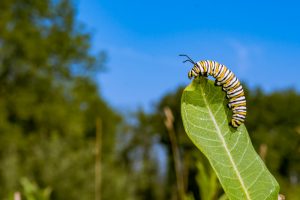 For those uninitiated in the art art of raising caterpillars: they take a while to become visible. A long while. Though we’d been promised that our plant came with a pair of Monarch eggs, those first two weeks rolled by with nary a sighting of the little beasts. Every day we checked for them, and every day I saw the skepticism grow in my students' eyes as I described the wondrous sight we were going to behold. Probably. Eventually. The morning we finally noticed wormholes in the leaves — evidence that our charges were indeed hatched and hungry — felt like waking up to breakfast in bed on your birthday.
Once our caterpillars became visible, they grew at a blazing speed, delighting the toddlers with their impossibly lovely stripes and ravenous eating habits. The students relished the idea that these creatures never, ever accepted any food but milkweed. “Wouldn’t you like some pizza, dears?,” I’d ask the worms. “Maybe a nice cup of coffee?” The children would squeal, “NO WAY!,” perhaps reminded of their own choosy appetites. An assortment of suggested names were bandied about, ranging from Lexy to Tiger to Dobo to Burp. (The caterpillars didn’t seem to have a preference.)
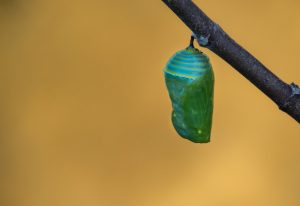 One sunny morning, we found the caterpillars hanging from the leaves in their mysterious “J” formation, the behavior that immediately precedes the formation of the chrysalis. Within hours, they were caterpillars no more. If I had not seen it with my own eyes, I could never have imagined the reverence and care the students extended once this transformation had taken place. They seemed to instinctively know their tiny pets now needed silence and space. Each morning, the toddlers took turns standing guard by the milkweed plant, gazing solemnly at the astonishing beauty of the chrysalises, misting them gently with a spray bottle. Many days of inaction followed ... yet, having awaited their friends’ first emergence, the students now had unwavering patience and faith. Some miracles, they’d learned, are worth waiting for.
When the butterflies emerged during the last week of school, we carried them to the playground and prepared to set them free. Before they departed, they allowed each and every toddler to hold them awhile and sing them a send-off song (the choice was painfully obvious: “Let it Go”). When the monarchs finally took to the sky and fluttered toward the Primary garden, I knew the students and I were feeling the exact same mix of elation and heartache. After all, many of our toddlers themselves would soon be flying to the other side of the playground fence, away from the nest of our classroom and our many loving days together.
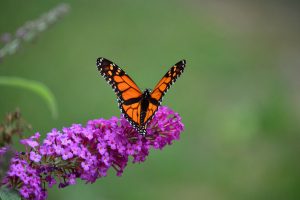 Six years later, having raised monarchs with every single toddler class I’ve taught since that first year, it’s time for my own metamorphosis. I am so excited for the new challenges and relationships that await me as I transition into the director of CASA role at Greensboro Montessori School. Yet there’s something about teaching that simply can’t be matched by any other profession. Year after year, I’ve witnessed the beautiful metaphor of little children caring tenderly for the tiny, fragile caterpillars whose lives begin in our classroom. I hope that’s in small part because they, too, have felt tenderly cared for here; that they understand the reverence and awe a teacher experiences as they watch their students grow, and the bittersweet pride they feel when it’s time to set their students free.
This year, when our current crop of monarchs depart for the great big world outside, we’ll all be ready to spread our wings and join them, together, in flight.
 About the Author
Brooke Juneau joined Greensboro Montessori School's Toddler faculty in 2013. She holds her Infant & Toddler (bith to 3 years old) Montessori teaching credential and graduated from Hampshire College with a Bachelor of Arts in education and human development. Brooke is the mother of three boys. Her middle son, Hayden, graduated from Greensboro Montessori School in 2017. Brooke plays the guitar and loves singing with her students. Beginning in the 2019-20 school year, Brooke will be the School's director of CASA.
“Turn it, and turn it, and turn it, and turn it, and turn it, and turn it, Compost Cake!”
“Pile it high, pile it high, pile it high, Compost Cake!”
If you’ve heard this song about compost all around campus this fall and winter, it’s because we got new compost bins in the Primary and Lower Elementary gardens! Why did we get new bins, you might ask? Two reasons:
- We needed more space for the volume of organic waste we produce (a combination of garden waste and food scraps from the students' lunches and snack preparation)
- We wanted to try a more interactive, faster, and developmentally appropriate compost model for our younger students.
So what did we get? If you visit the Primary and Lower Elementary gardens, you’ll see some giant green cylinders sitting on a rotating axis. These compost bins are called tumblers. Tumbler compost models allow students of all ages to spin the compost (working those gross motor skills), in addition to speeding up the composting process. In our old bins, it took at least a year for our food waste and garden scraps to decompose fully, we'll make finished compost in as little as two weeks. Cheers to that!
What is Compost?
Compost is the product that’s left after organic matter has fully decomposed. It’s also called humus. Human-made compost comes from carefully mixing food and garden waste materials — ingredients high in either nitrogen or carbon — and placing them in an environment where they can decay. When the decaying process has gone well, we put the finished compost, or humus, back into the garden soil and grow healthier plants by improving soil fertility.
Why do we compost at Greensboro Montessori School?
For starters, compost has a longer ground-life than other fertilizers. It lasts longer in soil than crop residues or animal manures that degrade rapidly here in the humid Southeast. This longevity makes for healthier plants and food crops. Composting also reduces our waste throughout campus. By diverting organic matter from the landfill and into a closed-loop cycle, we transform our “waste” into a fertilizer for our gardens and food for the microorganisms that live in the soil beneath us. We also save money by eliminating the need and associated cost of additional soil fertility inputs. And let's not forget, composting is just plain fun!
Can you think of any other reasons to compost? Maybe, that by doing it, we are feeding the worms our Toddlers so adore? That it’s a responsible use of resources? That it's a project-based way to teach science? Share your thoughts with us! And, if you want to learn more, please join us at our next Community Garden Workday for more composting tips and tricks with our environmental education faculty. We’d love to have you.
If you're interested in learning more about the science of composting, read this article from Live Science.
 About the Author
Eliza Hudson is Greensboro Montessori School's lead environmental educator. Eliza holds her bachelor's degree in biology from Earlham College in Richmond, Ind. She has built and tended school gardens, taught hands-on cooking lessons and connected local farms to school programs working for FoodCorps. Prior to joining Greensboro Montessori School in 2014, Eliza was a classroom and after-school assistant at the Richmond Friends School, a farm intern at a family-owned farm in Ohio, and served as assistant director at a summer day camp in an urban community garden in Durham.
Greensboro Montessori School has taught environmental education since 1995 and has been permaculture gardening on its campus since 1997.
Within the three-year cycle of Lower Elementary (first through third grades), students and teachers spend one year studying the fundamental needs of humans. This theme is woven throughout their curriculum and students embark on relevant research projects providing purpose and context for their learning. Over the year, the students learn why food, water, shelter, clothing, art, and community are necessary for humanity and how these needs have remained consistent throughout our time on Earth.
One of the ways our students share their growing knowledge of human civilization, and our most basic needs, is through their Festival of Light presentation. Students read the book “Celebrations Of Light : A Year of Holidays Around the World” by Nancy Luenn. The book is a springboard to research projects centered on 12 countries and the light-themed cultural celebrations that both define and unite them. It provides exposure to the diversity of our world while simultaneously highlighting how light brings people together.
Students form teams, each taking one of the 12 countries and its respective celebration. From there, they delve into the history of the country, its culture, and the celebration. They study some of their nation’s accomplishments, art, food, geography, religion, storytelling, traditions, and writings. All of this research prepares them to participate in Greensboro Montessori School’s triennial Festival of Light.
The Festival of Light features all of our Lower Elementary students in an evening presentation for their families, faculty, and members of the greater school community. Each of the 12 teams prepares a narrative on their country’s celebration of light. The celebrations include:
- New Year's Eve in Brazil
- The Chinese New Year
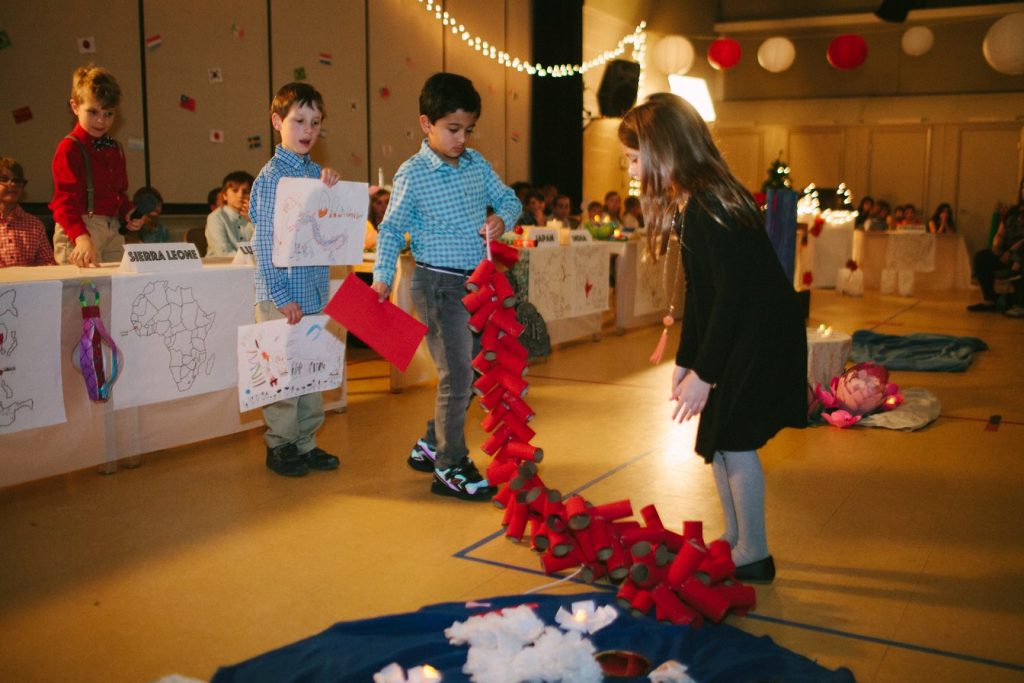
- The Lantern Parade (Eid al-Fitr) in Sierra Leone
- Lichtmesdag in Luxembourg
- Buddha's birthday in Korea
- Bon Matsuri in Japan
- Diwali in India
- Loy Krathong in Thailand
- Hanukkah in Israel
- Luciadagen in Sweden
- Christmas in the United States
- Las Posadas in Mexico
- Kwanzaa in the United States
The presentation itself anchors our students’ research in purpose and provides these first, second, and third graders with a nurturing and challenging academic experience. Surrounded by their families, friends, and teachers, students share their knowledge in a safe space where they will be celebrated for their work. The Festival of Light also challenges our students by pushing them to develop and expand their public speaking and presentation skills in new ways.
When the last celebration has been presented, the audience chairs have been put away, and the families have left for home, there’s no doubt our students have been part of an educational experience. One that has taught them about the fundamental needs of humans, community, teamwork, and so much more.
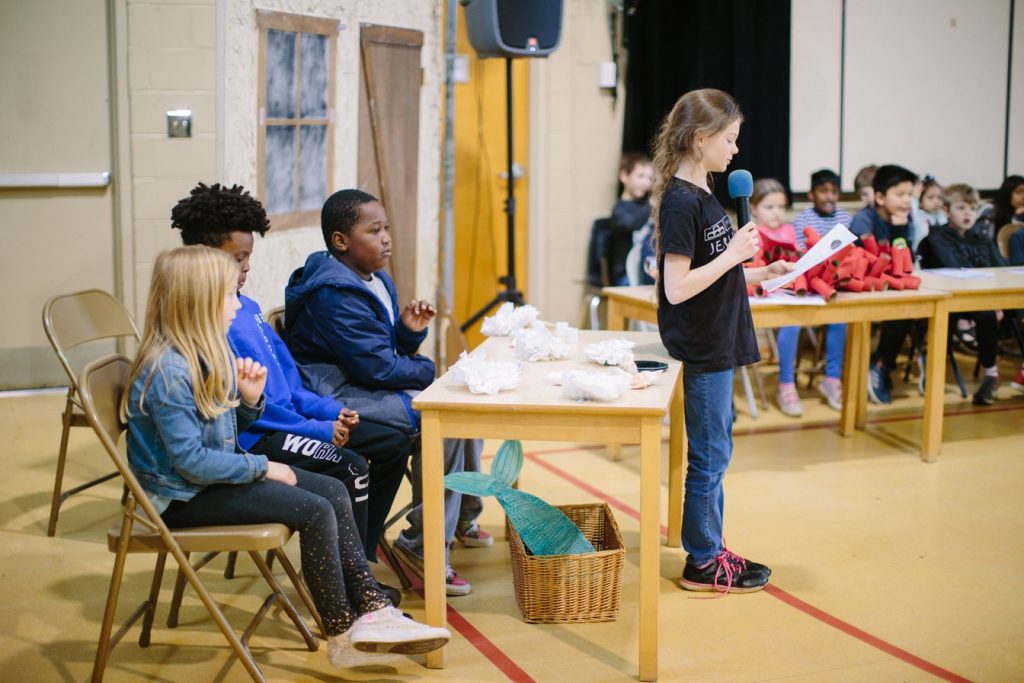
Lower Elementary students rehearse for Greensboro Montessori School's triennial Festival of Light.
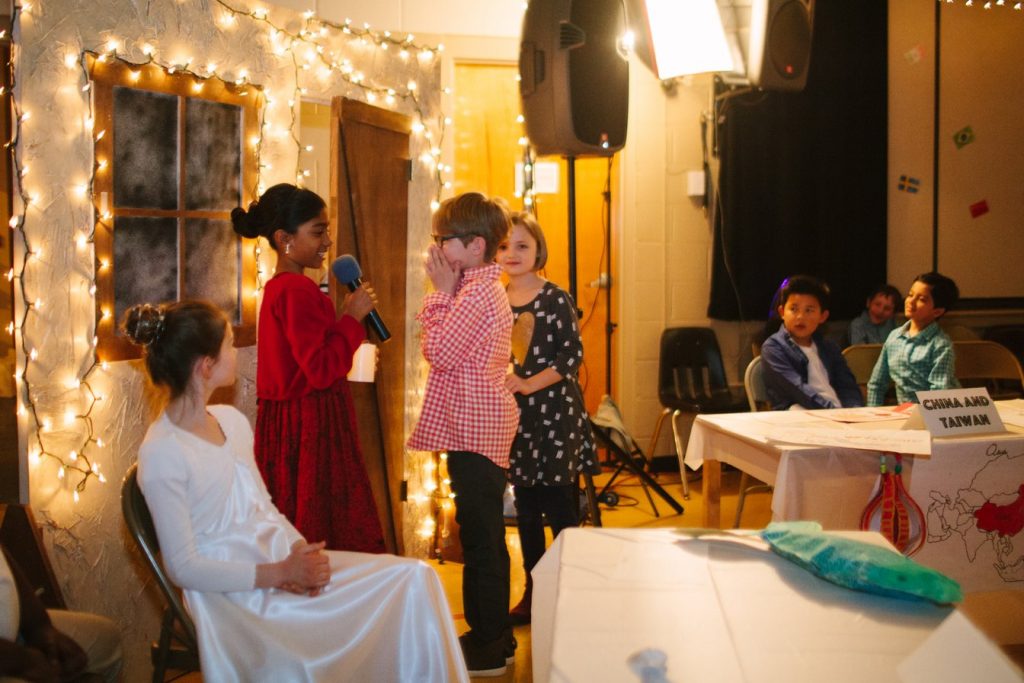
Students reenact the Candlemas tradition of going door to door singing for a candy treat.
Students present the Chinese New Year, which is celebrated in China and Taiwan.
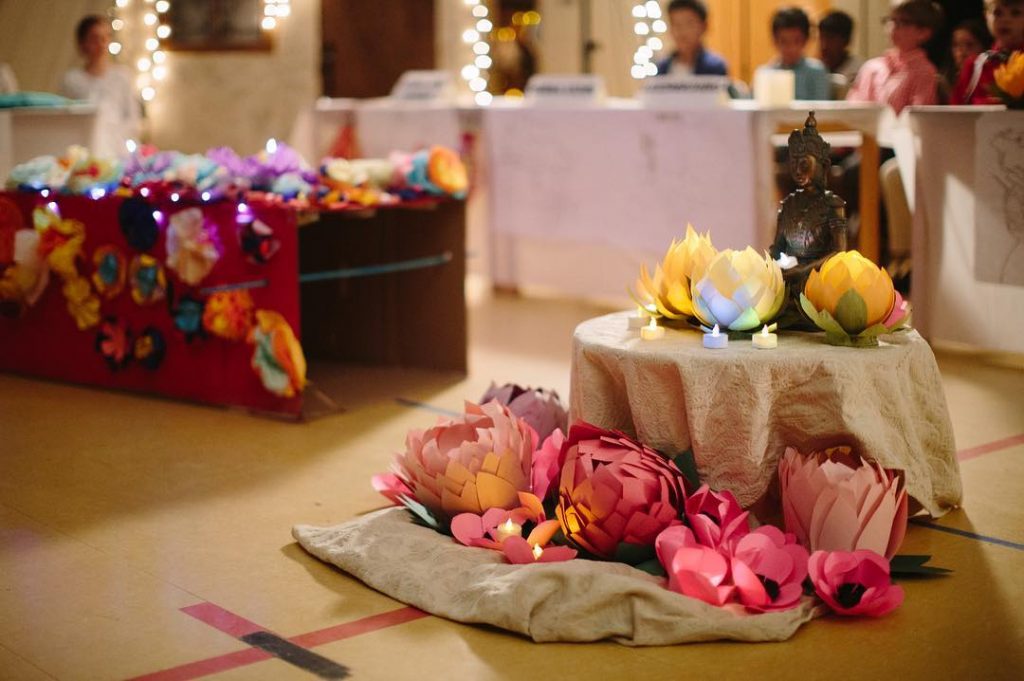
Pictured to the left is a student-made float for the Lantern Parade celebrating Eid al-Fitr in Sierra Leone. The celebration of Buddha's birthday in Korea is pictured to the right.
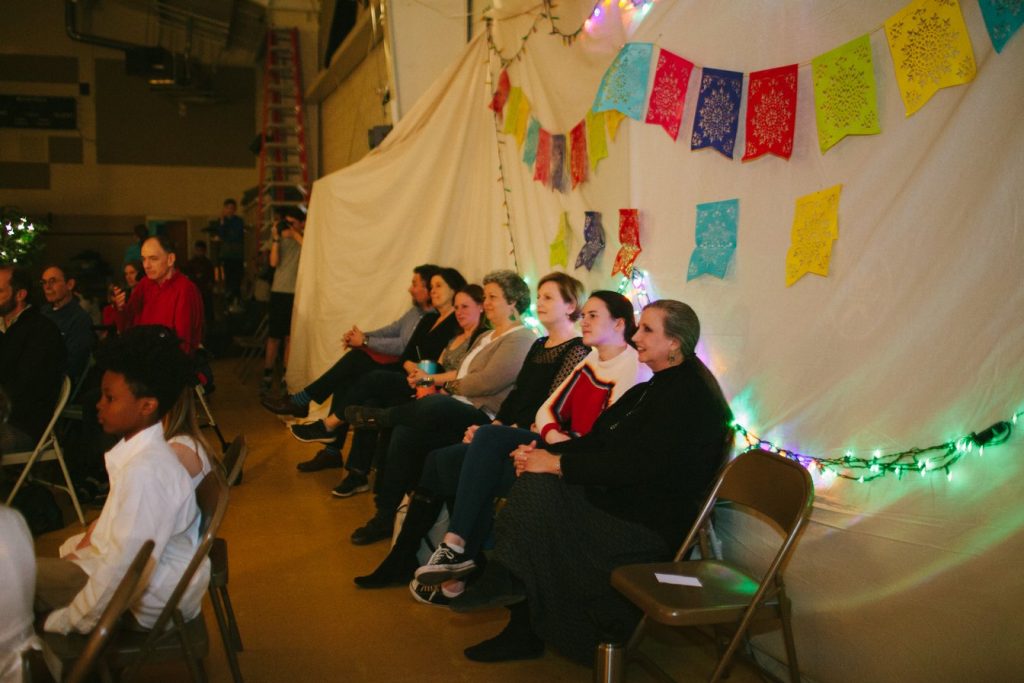
Here are the faculty, off to the side, letting the students take the lead in presenting their student research.
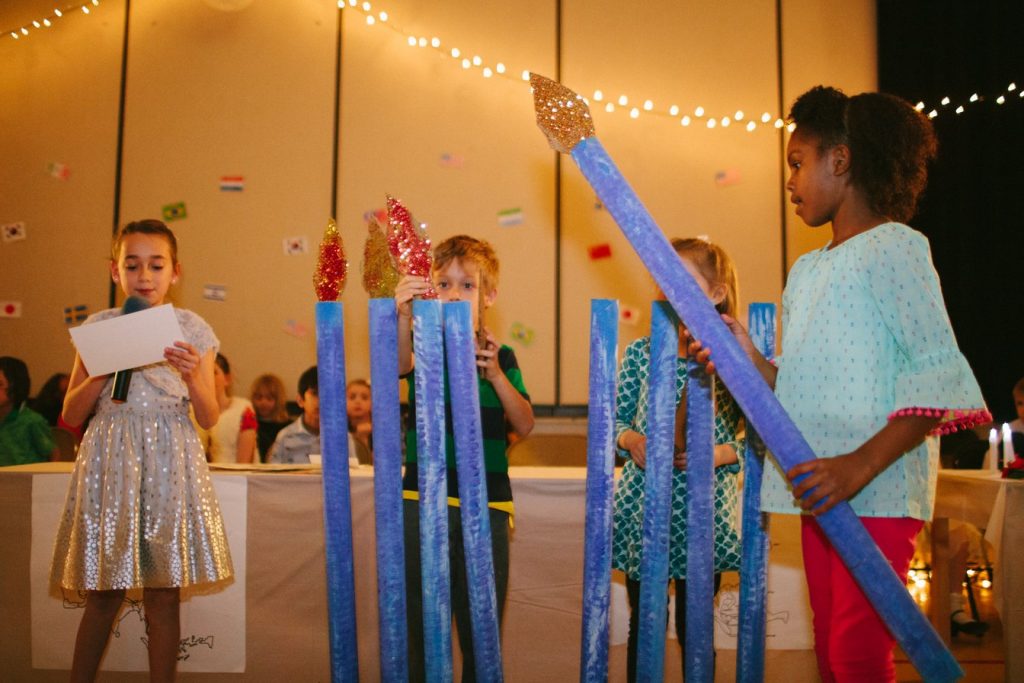
Students present the menorah and the lighting of the candles for Hanukkah in Israel.
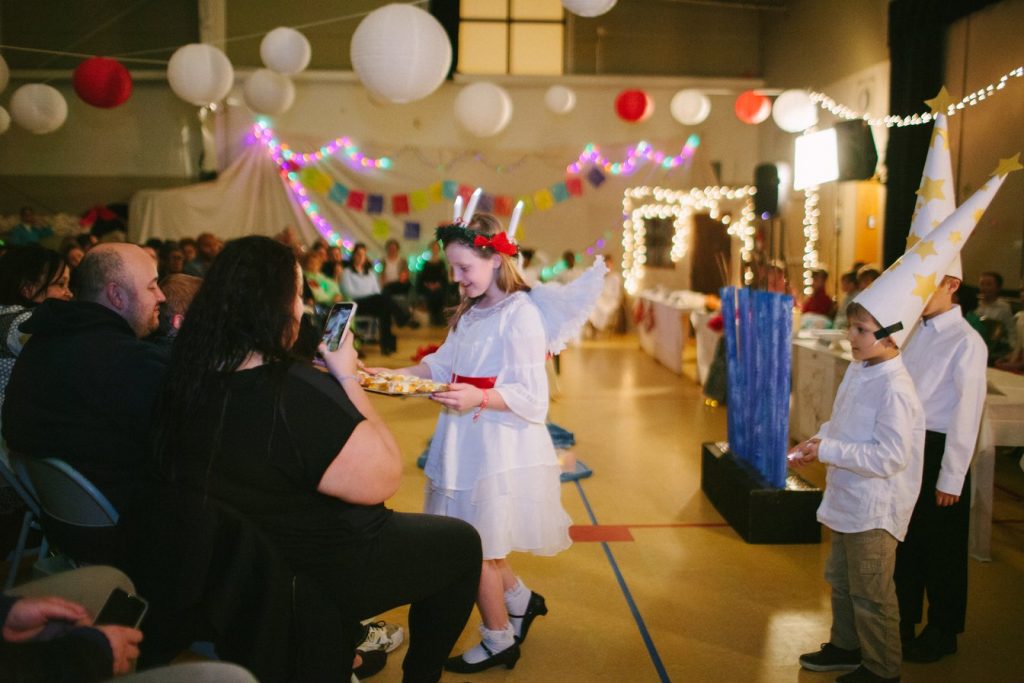
Luciadagen, or Lucia's Day, in Sweden, involves children dressing in all white and leading a procession while also handing out saffron buns.
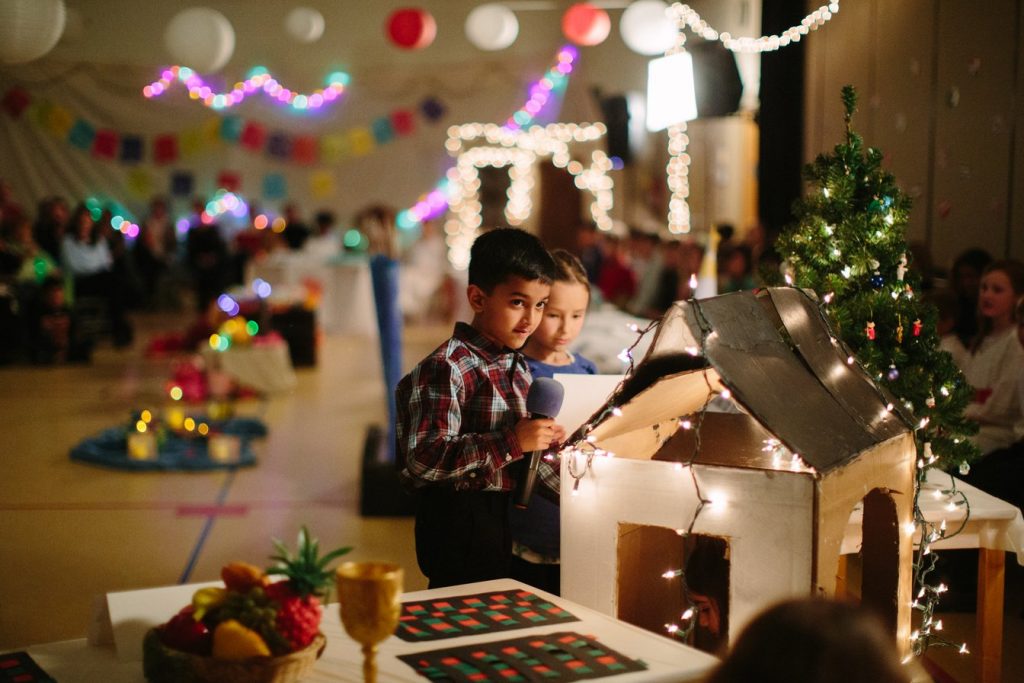
Las Posadas is a Christmas tradition from Mexico and is a reenactment of Mary and Joseph's search for the inn ("la posada") on Christmas Eve.
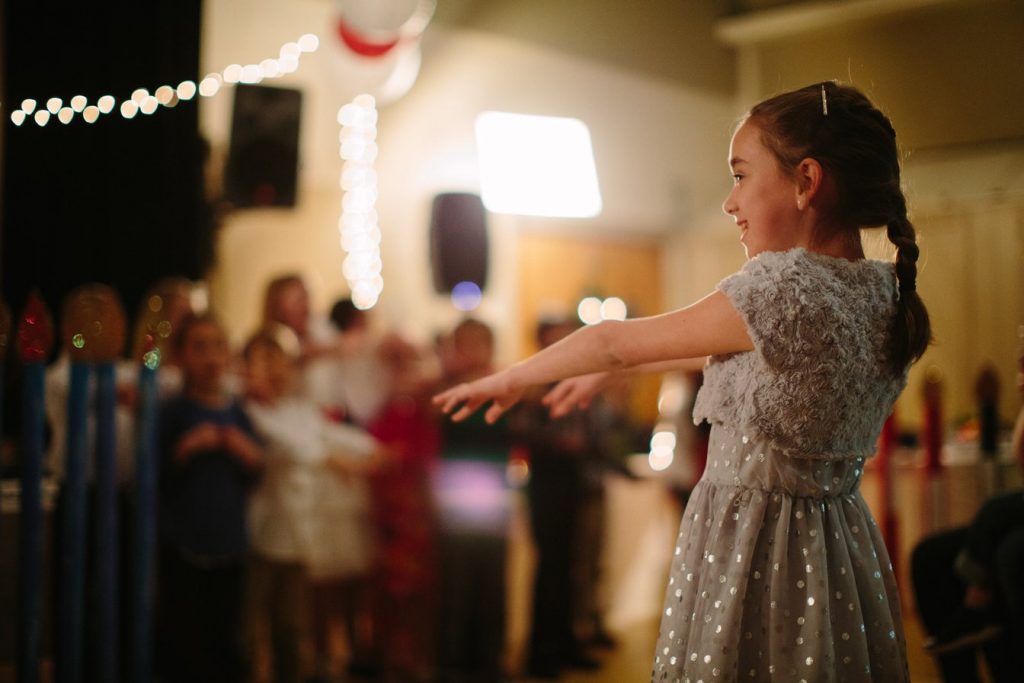
A third-grade student leads her peers in the final presentation of the night, a secular version of the song "This Little Light of Mine."
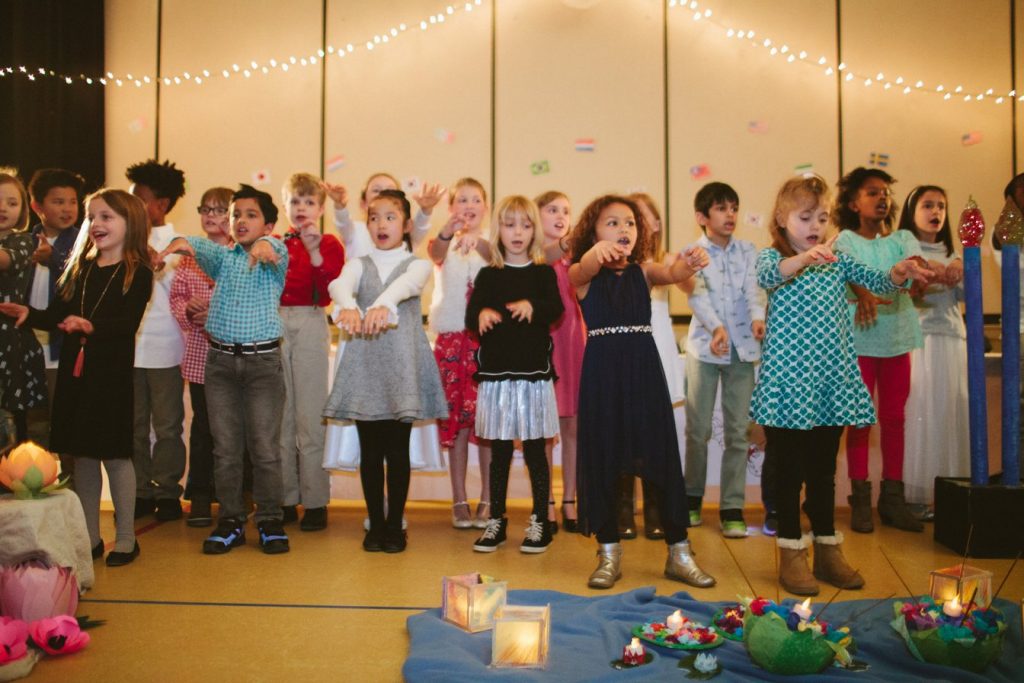
Students close their presentation by singing a secular version of "This Little Light of Mine."
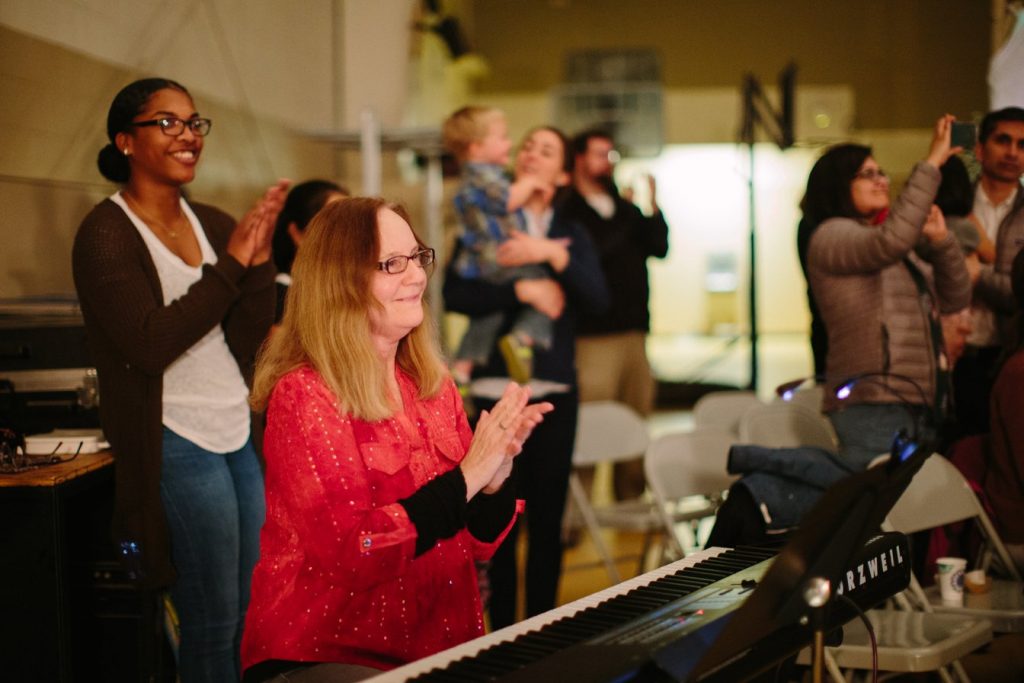
The Festival of Light comes to an end, and the students enjoy tremendous applause from the audience.
If you were lucky enough to be at Greensboro Montessori School last Thursday night, or with us via the livestream, you were treated to quite a show! Simply put: our fourth, fifth, and sixth graders' 17th annual Fare Faire production, “Back to Families Feudal,” was fantastic: high-quality, well-researched, technically sound, aesthetically powerful, and laugh-out-loud funny.
Fare Faire is a rite of passage for Upper Elementary students at Greensboro Montessori School. This annual theatrical production integrates students’ language arts, history, and performing arts curriculum. As students learn about the medieval historical period, they also read related literature and work together to bring a story to life on stage. The name, “Fare Faire,” is a creative play on words which highlights the communal meal Upper Elementary students and their families enjoy before the student-led performance - this year the potluck dinner of years' past gave way for a sweeter dessert feast.
And with all this work, all this project-based learning, all this technical and logistical demand of putting on a 31-person theatrical production, I have to ask: where were the teachers? I barely saw them all night.
 I heard Cathy Moses and Tessa Kirkpatrick may have been backstage to reassure a few worried students or help with a tricky transition; and I saw Jonathan McLean and John Archambault lingering over at the light and sound board, and even once saw them each use the spotlight, but I think it was only because the sixth grader running the sound board told them what to do. The rest of the time, I saw the teachers pretty much relaxing and enjoying the show, sometimes just leaning against the bleachers or even sitting in the audience. When I complimented them on the show, they said, “Yes, the students did a great job.” While I cannot underscore the intense, long, and passionate hard work the faculty have put in over the past three weeks, one thing was crystal clear Thursday night: the teachers were not in charge of this show. The students were.
In my 20 years of independent school education, I’ve seen plenty of wonderful “student-led” productions. But not until our very own Fare Faire, have I seen a show so incredibly run by the students. When we walked into the Gym, it was a student decorations manager who had transformed the space into a medieval stage; where there was a line forgotten, it was a student director who whispered a line; when there was a costume glitch, it was the student costume manager who responded; whenever someone missed a cue to come on stage, there was a student stage manager giving them a gentle shove onto the stage; or when one of the mics crackled, it was the student sound manager who adjusted the board settings.
Sixth graders have the opportunity to step into leadership roles for the production. Stella and Mahinda were the directors. Leila the stage and decorations manager. Whitley was in charge of costumes, while she and Stella also worked with Jillian Crone to spearhead marketing for the show. Andrew was in charge of sound and lights, while Mohamed was in charge of microphones. Dalia was in charge of props, and Kylee in charge of photography. Leading their fourth and fifth grade peers in producing Fare Faire is a capstone experience for these students. They had been preparing for that responsibility and honor all throughout the first two years of their three-year cycle.
Our three-year Upper Elementary program has always delivered a strong and unique learning experience for our students. Building on the Montessori skills and foundations that have been developed throughout the Primary and Lower Elementary divisions, our fourth through sixth graders are empowered to come into their own as they transition to the Upper School. They take responsibility for their learning in real-life applications; they develop all the academic and social-emotional skills they need to thrive in life; and they learn who they are and how they will step into the world. It is a critical time in the students’ development. And it is big work.
And that big work is guided by a group of inspired and hard-working “teacher-guide-people,” as the faculty sometimes call themselves. Each subject matter experts themselves, they know that so much of the Montessori approach is correctly and carefully setting up the prepared learning environment to guide the students to their own success. With most traditional schools, and even some great schools that try to be more innovative, the model is teachers as the "sage on the stage," filling students with facts and information; not at our school. It is teachers as guides, teachers as inspirers, teachers as coaches, and teachers as expert listeners, researchers, and observers to see what each and every student uniquely needs.
So, where are the teachers?
They are there, every single step of the way, knowing how to both nurture and challenge, knowing how to inspire and empower students to do the work themselves, and knowing when to step back and let the students take ownership and responsibility for their own work, for their own success, and for their own theatrical production, as was the case during the simply fantastic Fare Faire production on a recent and chilly Thursday night in January.
Sara Stratton leads Primary students in making dressing for their strawberry spinach salads.
Springtime is always joyful in Greensboro Montessori School's organic gardens. Winter buds swell and burst, capturing the eyes and hearts of community members, no matter their age! Flowers of all kinds call to us and to our pollinator friends, and sooner than we realize, we reach the height of the season.
This year brought a colder and wetter forecast than in the past. We’ve still yet to harvest our first sugar snap peas, but the strawberries and spinach are out with a vengeance! We continue to enjoy the lushness all the early rain and cool weather brought, even as temperatures rise. Here’s a brief update from our spring adventures!
Primary and Lower Elementary have enjoyed plenty of weeding, watering, planting, and tasting. We just finished a week full of strawberry spinach salads, with a bit of fennel and spring onions thrown in for fun! (Check out the recipe below if you’re interested in trying this at home.) In Upper Elementary, we celebrated the conclusion of our Student Climate Change Summit art exhibition with a persimmon-ginger-honey ice-cream party! Everyone agreed it was fun to make and even better to taste!
Thanks to everyone who attended our Spring Community Garden Workday in the Primary Garden. Together, with roughly 20 volunteers from our school community (ranging in age from 18 months to 70 years old!), we had a blast and accomplished a swath of projects:
- A group of students and dads built a blackberry trellis.
- Sara Stratton supervised several painting projects: our new fence, sink, and picnic tables got all glammed up in a matter of minutes!
- Another dad mixed concrete, which every child who came to the workday used to make a decorative stepping stone.
- Nearly everyone weeded, watered, snacked, swept, and generally left the space looking wonderful for the students, faculty, administration, and all the special guests we welcome in the spring!
What else have we been up to in the organic gardens this spring? We have been incredibly blessed with the generosity of The Fund for GMS. You may have noticed several new Adirondack chairs, benches, swinging benches, outdoor sinks, and chalkboards in all three of our organic gardens. We also have a new Lower Elementary toolshed coming soon. The students have relished in these new additions to their outdoor classrooms, and we couldn’t be more grateful to have such gifts shared with us from within our school community. Thank you, for your continued support of environmental education at Greensboro Montessori School. From all of us on your environmental education teaching team, Happy Spring!
Strawberry Spinach Salad
For the salad:
- 1 pound fresh spinach, washed and spun
- 1 pound fresh strawberries, washed and dried
- 2-3 spring onions, optional
- 2-3 leaves fennel, minced
For the dressing:
- 1/4 cup olive oil
- 1/8 cup balsamic vinegar
- 1 tablespoon honey
- 1 pinch cinnamon
About the Author
Eliza Hudson is Greensboro Montessori School's lead environmental educator. Eliza holds her bachelor's degree in biology from Earlham College in Richmond, Ind. She has built and tended school gardens, taught hands-on cooking lessons and connected local farms to school programs working for FoodCorps. Prior to joining Greensboro Montessori School in 2014, Eliza was a classroom and after-school assistant at the Richmond Friends School, a farm intern at a family-owned farm in Ohio, and served as assistant director at a summer day camp in an urban community garden in Durham.
Greensboro Montessori School has taught environmental education since 1995 and has been permaculture gardening on its campus since 1997.